French grammar · A1 · Lesson 11
Ce, cet, cette, ces (this, that). Left and right
French uses ce (masculine), cet (masculine before a vowel or silent h), cette (feminine) and ces (every plural) for both “this” and “that”: ce bras, cet homme, cette dame, ces dames. Add -ci or -là to the noun only to contrast two things: ce bras-ci, ce bras-là.
Last updated:
How does it work?
When you point at something, French uses a demonstrative: the word for “this” or “that”. Like le and la, it has to match the noun’s gender and number, so there are four forms.
| singular | plural | |
|---|---|---|
| masculine | ce bras cet homme | ces bras ces hommes |
| feminine | cette dame | ces dames |
Why cet? For the same reason le becomes l’: French hates two vowels bumping into each other. Ce homme would leave a little gap in your mouth, so a t is slipped in: cet homme, cet instant, cet Italien. It is still masculine, but it sounds exactly like cette. Your ears cannot tell them apart; only the spelling can.
Ces is the easy one: one word for every plural, masculine or feminine, and it sounds like “say”. Before a vowel, its s wakes up as a z: ces‿hommes, “say-zom”.
This or that? French usually does not bother. Ce bras is “this arm” or “that arm”, and the situation decides. If you really need to point at two things, add -ci (here) or -là (there) to the noun: ce bras-ci, this arm; ce bras-là, that arm. In the story, Bernard does not need to: everybody is staring at the same arm.
Left and right. Gauche and droit are adjectives, so they go after the noun and agree with it: le bras gauche, la main gauche, le bras droit, la main droite. To give directions, use à gauche and à droite, with no article: la cabine est à droite. And tout droit means “straight on”, not “all right”: ask for directions in Paris and you will hear it a lot.
What does it look like in the story?
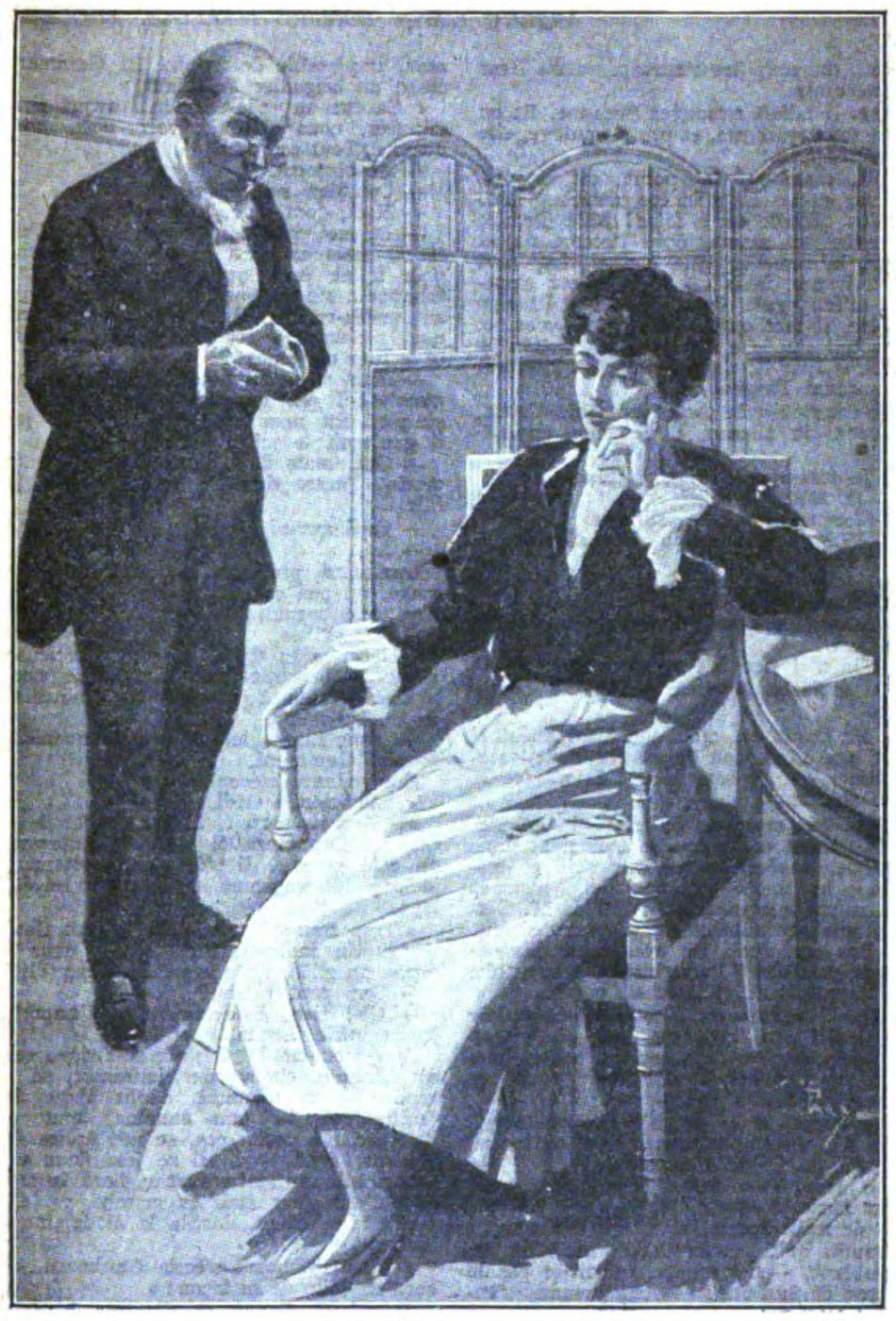
These sentences come from lesson 11, “The left arm”, where the narrator is crossing the Atlantic on the liner Provence with Arsène Lupin hidden among the passengers.
| French | English |
|---|---|
| Ce bras, c’est le bras gauche ! | That arm is the left arm! |
| Cet homme est blond, il voyage seul. | This man is blond, he travels alone. |
| Cette pauvre dame est pâle et elle tremble. | The poor lady is pale and trembling. |
| Ces mots sont très clairs. | Those words are very clear. |
Try it: Ce, cet, cette: three words for “this” or “that”. Why three? Look at the noun that follows each one. And what does the fourth sentence use for “those”?
« Mes yeux croisèrent ceux de miss Nelly: il avait montré le bras gauche. »
My eyes met miss Nelly’s: he had shown his left arm. Maurice Leblanc, L’Arrestation d’Arsène Lupin (1905).
How is it different from English?
English picks its word by distance: “this” is near, “that” is far, and the plurals are “these” and “those”. French picks by gender and number instead: ce, cet, cette, ces, and leaves distance to -ci and -là when it matters at all.
What mistake do English speakers make?
The classic slip is ✗ ce homme or ✗ ce instant. Before a vowel or a silent h, a masculine noun needs ✓ cet: cet homme, cet instant. And for directions French uses no article: ✗ à la gauche, ✓ à gauche.
Where can I practise it?
- Lesson 11: The left arm: the story, the rule and interactive exercises, free.
- Review 3: lessons 11 to 15: this point again, in a summary table with the other lessons of the block.
- The A1 glossary: every word of the course, French to English.
← Possessives: mon, ma, mes, son, sa, ses · The partitive: du, de la, des and pas de →